Flameless heater: which kinds still burn fuel, and where it vents
- Written by
- Wade Holloway
- Checked
- Read
- 5 min
- Method
- How we write fixes
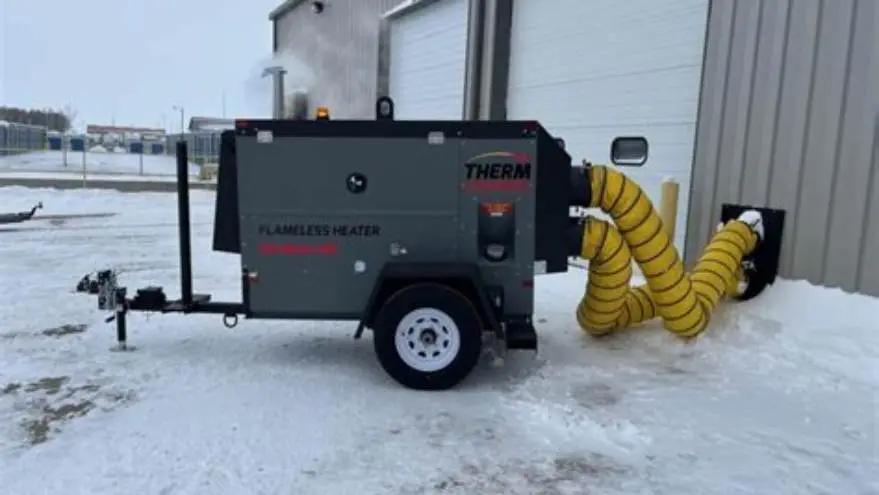
A flameless heater is a marketing label, not a type. Electric heaters and ration packs use no combustion. Catalytic, indirect-fired diesel and diesel air heaters all burn fuel, so check the spec sheet for an exhaust outlet.
Spec plate
- Burn nothing
- Electric heaters, chemical ration packs
- 1,500 W electric draw
- About 12.5 A at 120 V
- Diesel fuel use
- About 0.03 gal/h (0.12 L/h) per kW
- 2 / 5 / 8 kW output
- About 6,800 / 17,000 / 27,000 BTU/h
- Diesel running draw
- Check the maker's electrical specification
- Glow-plug start draw
- Check the maker's electrical specification
Procedure index10 steps & sections
- What is a flameless heater in a heater search?
- Sort every flameless heater by what it burns and where it vents
- Check the limits of electric and catalytic flameless heaters
- Electric: no combustion, but the amps add up
- Catalytic: no flame, still burns fuel and air
- Place indirect-fired and diesel air heaters in the picture
- Read a product listing to find the real type
- Fit a CO alarm and a sealed exhaust path for any unit that burns fuel
- Checklist
- Owners also ask
What is a flameless heater in a heater search?
Ask what is a flameless heater and you'll get five different answers. It's a marketing label, not a technical category. Sellers apply it to anything without an open flame you can see.
Five products share the word. Electric heaters, catalytic gas heaters, indirect-fired diesel units, small diesel air heaters (parking heaters) and chemical ration heaters all carry it. Two use no combustion. Three burn fuel and make exhaust gas.
For a van, RV, garage, shed, tent or job site, the meaning is one of the first four. In diesel heating, 'flameless' normally means a sealed combustion chamber. The fuel still burns. The exhaust leaves through a pipe.
Ration heaters are the odd one out. A flameless ration heater is a pouch with a magnesium-iron pad. Add water and it warms a meal. It heats food, not a space, so if that's your search, you're on the wrong page.
Treat the word as a claim, and check the spec sheet for a fuel input, an exhaust outlet and an air intake.
Sort every flameless heater by what it burns and where it vents
Sort any flameless heater with two questions. Does it burn fuel? If it does, where do the gases go? The table answers both for the common types.
'Into the room' is the entry to worry about. Catalytic heaters send combustion products into the room, while sealed diesel types use a pipe to send exhaust outside. Electric heaters produce no combustion gases.
Direct-fired heaters, such as kerosene torpedo units, have a real flame and put all exhaust into the space. They aren't sold as flameless. If a listing shows a blower, a fuel tank and no flue, treat it as direct-fired.
Find your product's row, then hold it to that row's exhaust path.
| Type | Burns fuel? | Exhaust path | CO alarm needed? |
|---|---|---|---|
| Electric heater | No | None made | Not for the heater itself |
| Catalytic heater (propane or natural gas) | Yes, on a catalyst pad | Into the room | Yes |
| Indirect-fired diesel (job site cabinet) | Yes, in a sealed chamber | Flue duct to outside | Yes, for the work area |
| Diesel air heater (parking heater) | Yes, in a sealed chamber | Exhaust pipe to outside | Yes, in occupied areas |
| Chemical ration heater | No, a chemical reaction | Not a space heater | Not applicable |
Check the limits of electric and catalytic flameless heaters
Electric and catalytic units are the two people mix up most. One needs no ventilation and a lot of power. The other needs little power and a lot of air.
Electric: no combustion, but the amps add up
Electric heating makes no combustion gases. The limit is power. A 1,500 W unit draws about 12.5 A at 120 V and gives roughly 5,100 BTU/h. That takes most of a 15 A circuit, and anything else on it will trip the breaker.
On a job site, a generator has to carry that load for every heater. In a van it's worse. 1,500 W through an inverter pulls over 125 A at 12 V, before losses. Check the maker's electrical specification for a diesel heater's running draw. The Battery & Power Calculator on this site works out the figure for your own heater.
Catalytic: no flame, still burns fuel and air
A catalytic heater passes gas, usually propane, over a coated pad. The pad glows with no visible flame. It still consumes fuel and oxygen. It releases water vapour, CO2 and some CO, more when it's starved of air.
Ventilate for it. Manuals call for a fresh-air opening, and the size varies by model, so read yours. Many ban use in sleeping areas. Place the CO alarm as its own manual says, rather than relying on a general mounting rule.
Place indirect-fired and diesel air heaters in the picture
An indirect-fired diesel heater does burn fuel. The flame sits in a sealed chamber, and a metal heat exchanger passes the heat to the air. Exhaust leaves through a separate duct, and only clean heated air enters the space. A damaged exchanger can contaminate that airstream.
Job site cabinets are the large version. They're sold from tens of thousands to several hundred thousand BTU/h, so check the rating plate. They connect to a flue duct and often an intake duct. Use the fuel the manual names, diesel or kerosene.
VEVOR, Hcalory, Webasto and Espar are examples of makers that offer small diesel air heaters. Check the maker's manual before treating any listing as equivalent. A 2 kW unit gives about 6,800 BTU/h, a 5 kW unit about 17,000 and an 8 kW unit about 27,000. Fuel use runs about 0.03 gal/h (0.12 L/h) per kW, so 2 kW at full power burns about 0.06 gal/h (0.24 L/h).
Each has a glow plug, fuel pump, combustion air intake, exhaust pipe and warm-air outlet. Sellers call them flameless because no open flame shows in the cabin. Keep the intake apart from the exhaust outlet. Don't point either toward the other or toward an open window.
Work out your own hourly cost with the Fuel & Cost Calculator before you pick a size.
Read a product listing to find the real type
Marketing copy changes. The hardware doesn't. Photos, parts lists and the spec table show the hardware, and five items settle the type.
- Find the fuel input. A fuel pump and line mean diesel or kerosene. A regulator and hose mean gas. A mains plug and no fuel means electric.
- Find the exhaust outlet. A pipe stub or flue collar means exhaust is meant to leave the building. A fuel burner with no outlet puts it in the room.
- Find the combustion air intake. Sealed diesel units have a separate intake for burning air. Catalytic units have none.
- Look at the ducting. Warm-air ducts plus a separate exhaust pipe point to an indirect design.
- Read the rating. Electric lists watts or amps. Fuel units list BTU/h or kW and fuel use per hour.
Fit a CO alarm and a sealed exhaust path for any unit that burns fuel
Every fuel-burning type needs a carbon monoxide alarm, including the sealed ones. Quick test for a listing: count the pipes in the photos. A fuel line, an exhaust pipe and a separate air intake means a sealed diesel unit. A fuel hose and no pipes means catalytic or direct-fired. Beware 'no ventilation needed' next to a fuel input, and ask for the manual before you pay.
Before you decide the setup is safe, run this checklist:
- Exhaust outside: route the pipe to open air, clear of windows, vents and tent walls.
- Sealed joints: tighten every clamp, leave no gaps, and recheck after the first runs.
- Intake clear: face the air intake away from the exhaust outlet so it can't pull exhaust back in.
- Alarm placed: install the battery-powered CO alarm where the alarm or heater manual specifies.
Checklist
- Check the exhaust path before buying. Fuel with no exhaust outlet sends gases into the room.
- A sealed combustion design still needs sound joints and an intact heat exchanger.
- Electric heating shifts the limit to available amps and battery capacity.
- Catalytic heaters need fresh air and a CO alarm. Follow the heater and alarm manuals.
Owners also ask
Is a flameless heater safe to use indoors?
It depends on the type. Electric heaters are, within your circuit's limit. Sealed diesel units are, with the exhaust outside, sound joints and a CO alarm. Catalytic units need fresh air per the manual, and many ban use in sleeping areas.
Does a diesel parking heater produce carbon monoxide?
Any combustion makes CO. In a correct install it leaves through the exhaust pipe. A loose joint, a cracked heat exchanger or exhaust drawn into the intake brings it inside, which is why the alarm stays.
Is an indirect-fired heater the same as a diesel air heater?
Same principle, different scale. Both burn fuel in a sealed chamber and send exhaust outside. Job site cabinets are far larger and use a flue duct, while parking heaters run 2-8 kW. Check the rating plate.
What does an exhaust leak look like on a diesel air heater?
Look for soot around clamps and pipe joints, a diesel exhaust smell in the cabin, or a CO alarm reading above zero. Any of these means stop the heater and fix the joint before you run it again.