Diesel heater in a livestock barn: keep the intake out of the dust
- Written by
- Wade Holloway
- Checked
- Read
- 8 min
- Method
- How we write fixes
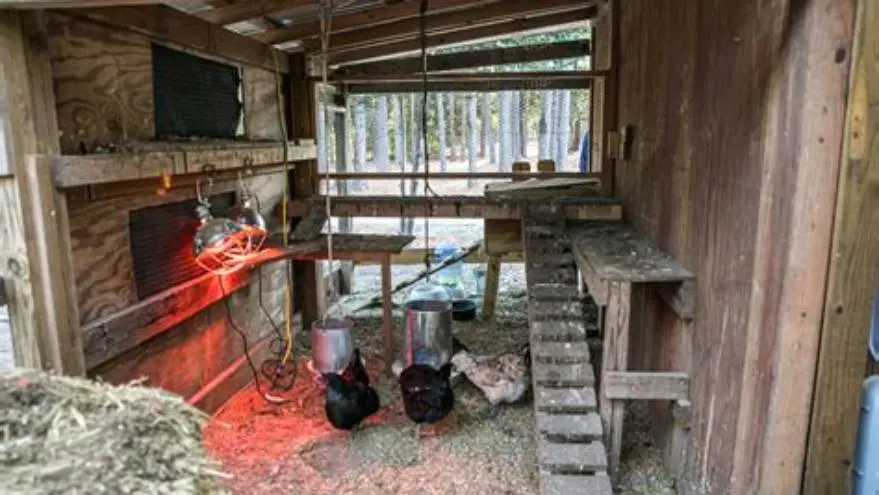
Heating a livestock barn in winter with a diesel heater works best one pen at a time. Duct combustion air in from a clean spot outside, pipe the exhaust out clear of hay, and size for the pen: about 2 kW for a 12 x 12 ft insulated pen.
Spec plate
- Common parking heater range
- 2-8 kW, depending on model
- 12 x 12 ft pen
- about 2 kW, insulated
- Fuel at 2 kW full
- about 0.24 L/h, depending on model
- Start-up draw
- Check the heater manual; glow phase draws the most
- VEVOR supply minimum
- 15 A / 150 W; check your own manual's minimum voltage
- Inspection interval
- Weekly for the first month
Procedure index8 steps & sections
- Check what a barn does to a parking heater
- Duct combustion air in from a clean spot outside
- Route the exhaust outside and place the heater clear of bedding
- Heat the pen to the animals' needs
- Pick wiring, fuel line and pump for a damp, dusty building
- Inspect the intake, exhaust and burn pot every week at first
- Checklist
- Owners also ask
Check what a barn does to a parking heater
A parking heater breathes the air around it. In a van or workshop, that air is clean. In a barn it carries hay dust, chaff, ammonia and moisture, and each one finds a part of the heater to damage.
Dust enters through the combustion air fan and burns to ash and carbon. Starts get slower. Expect E-10 for failed ignition or E-08 for flame-out on some controllers, though code tables differ. VEVOR, for one, reports some supply faults as E-02.
Chaff also builds up on the warm-air side. A cake of it on the heat exchanger and fan insulates the metal. The body runs hotter and the heater trips on overheat, E-05, which on a VEVOR means about 536 F (280 C) at the body. Never defeat that sensor.
Ammonia and damp attack the electrics. Ammonia corrodes copper and brass terminals, so faults turn intermittent. Condensation in plugs and the controller throws random codes.
Run a quick test before you mount anything. Hang a white paper towel where you plan the intake during one morning of feeding and mucking out. Grey fuzz or a sharp ammonia smell means pick another spot. Do it before you drill.
| Hazard | Where it hits | What you'll see |
|---|---|---|
| Dust and chaff | Combustion intake, warm-air inlet | Hard starts, ignition faults, smoke, overheat |
| Ammonia | Copper and brass terminals | Crusty connectors, intermittent faults |
| Humidity | Controller, plugs, pump | Random codes, wet connectors |
| Rodents and birds | Exhaust tip, wiring | Blocked exhaust, chewed cables |
Duct combustion air in from a clean spot outside
Fit an intake hose that carries combustion air through the wall from outside. Without one, the burner pulls barn air straight into the chamber. With one, the dust, ammonia and damp stay on the other side of the wall.
Connect the hose to the port labelled combustion air or intake. Depending on the controller and heater version, the port can sit on the side, rear or base of the heater. Use the port shown in your own manual, not the warm-air outlet or exhaust port.
Choose the outside spot carefully. Pick a wall away from manure piles, ventilation fans and the feed door. Keep the mouth above the snow line and aim it down so rain can't enter. Follow the manual's spacing from the exhaust tip, doors, windows and vents.
- Connect the hose to the combustion-air port with a clamp. Match the hose size shown for your model, often 0.8-1 in (20-25 mm).
- Run it to the wall by the shortest path. Avoid kinks and tight bends, and stay inside the manual's length limit.
- Drill through the wall and fit a sleeve. Seal around it so drafts and rodents can't follow the hose in.
- Slope the hose slightly down toward the outside so condensation drains out, not toward the heater.
- Finish the outside end with a down-facing elbow and a coarse screen, about 0.25 in (6 mm) mesh, to keep out birds and insects.
- Run a full heating cycle. Check the flame, sound and controller against normal operation before leaving it.
Route the exhaust outside and place the heater clear of bedding
Pipe the exhaust through the wall and out. Use stainless pipe like the kit's own, never flexible dryer duct or galvanized. The pipe gets hot enough to ignite chaff and dry hay, so treat every inch as a fire source.
Keep it clear of anything that burns. Use the clearance in your manual. Where it gives none, keep the pipe well off bedding, hay, studs and wiring. Pass it through the wall in a metal thimble with an air gap, not bare timber.
Finish the tip outside, angled slightly down so condensate drains. Don't screen the tip, because mesh chokes it. Check for nests and soot during inspections.
Place the exhaust tip where prevailing air carries fumes away. A barn ventilation fan can create negative pressure and pull exhaust or spillage back through a door, window or vent. Keep the tip outside the fan's intake path and away from openings. Test with the fans running.
Mount the heater on a solid wall or steel bracket, off the floor. Two to three feet is a sensible start, so splash and shovelled bedding stay below it. Fence it off so animals can't reach the unit, cables or hot duct.
Aim the outlet duct along the wall or into the pen's upper air, not at loose straw. Blown straw makes dust and can clog the warm-air inlet. Fit a coarse guard there and clean it during inspections.
Add a CO alarm as a check on your seals. Mount it where people work or sleep, such as the tack room, at the height its instructions give. Check the alarm's rated temperature range before mounting it in an unheated room. Press the test button monthly.
Heat the pen to the animals' needs
Heat the zone the animals use. The common Chinese parking heater sizes top out around 8 kW, about 27,300 BTU/h on paper. A 30 x 40 ft barn usually needs more, even when insulated. A 12 x 12 ft pen needs a fraction.
Newborn animals need warmer, steadier conditions than healthy adults. The target depends on species, age, coat, health and bedding. Use the temperature range from your veterinary guidance, then place a thermometer at animal height in the sleeping area.
Adult cattle, sheep, goats and horses often cope with cold better than dampness and drafts. Dry bedding, shelter and a draft-free resting area can matter more than heating the whole barn. Sick, shorn or newly born animals need individual advice.
A thermostat can cycle the heater in a properly installed pen. It doesn't need to run continuously if the thermostat, heater and power supply are rated for cycling. Set the control from the thermometer at animal height, and keep a high vent open for moisture and ammonia.
Start with 30-50 BTU/h per sq ft for an insulated building with an 8 ft ceiling in a cold climate. This is a building rule of thumb, not a livestock-housing calculation. Gaps, wind, a high roof and animal temperatures can change the result sharply.
Fuel falls with the zone. At full power, use the heater's stated fuel rate for your calculation. Thermostat cycling cuts that. You can work out the number for your own heater with the Heater Size and Fuel & Cost calculators.
Build the zone before you buy. Close the pen with plywood, add a ceiling over it and block drafts at floor level. Don't seal it airtight. Warm air needs a return path, so leave an opening or low transfer duct from the pen back to the heater's room-side inlet. Keep a small high vent for moisture and ammonia.
Switch to an indirect-fired unit when the load exceeds the parking heater's capacity or you must heat the whole building. Indirect-fired designs keep combustion gases out of the warm-air stream. Check each model's combustion-air, flue and power requirements.
- Insurance: ask your insurer whether a fuel-burning heater in the barn is covered.
- Insulation: fix the pen's gaps first, because leaks double the load.
- Power: confirm a 12 V supply or 120 V outlet reaches a dry spot.
- Ventilation: leave a high vent so moisture and ammonia can leave.
| Space | Floor area | Rough need | Parking heater fit |
|---|---|---|---|
| 10 x 10 ft pen | 100 sq ft | 4,000 BTU/h (1.2 kW) | 2 kW |
| 12 x 12 ft pen | 144 sq ft | 5,800 BTU/h (1.7 kW) | 2 kW |
| 12 x 24 ft tack or milk room | 288 sq ft | 11,500 BTU/h (3.4 kW) | 5 kW |
| 30 x 40 ft barn | 1,200 sq ft | 48,000 BTU/h (14 kW) | Too big, use indirect-fired |
Pick wiring, fuel line and pump for a damp, dusty building
Size the power supply for the glow phase, not the normal run. The glow plug draws the most current during start-up. VEVOR's manual calls for a supply of at least 15 A / 150 W; check your own manual's minimum voltage and start current.
Keep wire runs short and fuse them near the source, using the gauge and fuse rating in your manual. Run cable in conduit, because rodents chew insulation. Seal connectors with adhesive-lined heat shrink and dielectric grease. Mount the controller in a dry tack room, not the aisle.
Put a battery in a vented box away from animals and bedding. Lead-acid and AGM batteries give you less usable capacity than lithium batteries with the same rating. Check the battery datasheet before choosing its size. On mains, use a 12 V supply rated above the start draw, in a dry spot, on a GFCI outlet.
Use diesel only, from a tank outside the animal space and well away from hay, straw and ignition sources. Set the tank on a stable stand, place a drip tray or other spill containment beneath it, and protect it from impact. Refuel with the heater off and cool. Keep a spill kit nearby, and clean any fuel before animals or bedding reach it.
Mount the dosing pump in a dry, raised spot at the tilt your manual gives. Commonly that's a slight upward angle, but check yours. A pump that ticks with no fuel flow means E-04 on many controllers.
Inspect the intake, exhaust and burn pot every week at first
Treat the first four weeks as a measurement period. Record dust, soot, fuel flow and start behaviour after each inspection. Shorten the interval if the intake or burn pot collects material quickly.
Run a five-minute check on a cold heater. Shine a phone torch down the intake and wipe inside with a white towel. Tap the exhaust pipe and listen for loose soot. Confirm the outside tip stays clear.
If the burn pot is crusted, remove and clean it, and fix the intake before you restart, or the crust returns. If codes persist after cleaning, check fuel and voltage with the Error Code Finder.
- Longer starts: the glow phase takes visibly longer than it did when the heater was new.
- Smoke: white or grey at start-up or shutdown.
- Cold-start codes: compare E-10 or E-08 with your heater's manual, then check fuel, voltage and airflow.
| Part | What to check | Warning sign |
|---|---|---|
| Intake mouth and hose | Look, then wipe inside with a white towel | Grey fuzz, dust cake, blocked mouth |
| Exhaust tip and pipe | Look for nests, soot, loose clamps | Black soot, rattle, nesting birds |
| Warm-air inlet guard | Check for a dust cake and restricted airflow | Louder fan, reduced warm air |
| Glow plug and burn pot | Clean on the manual's interval, sooner in a barn | Hard crust, black carbon |
Checklist
- Fit a coarse screen on the outside intake mouth. A fine filter clogs in days and starves the burner.
- Look at the intake, exhaust tip and warm-air inlet weekly for the first month, then adjust to what you find.
- Common Chinese parking heaters range up to about 8 kW. A whole-building job points to an indirect-fired unit instead.
- Keep the controller, pump and connectors out of the barn aisle. Ammonia and damp corrode them.
Owners also ask
Can I draw the warm-air inlet from outside too?
It's not a good idea. The heater would warm freezing outdoor air every cycle and burn more fuel. Fit a coarse guard on the inlet inside the pen and clean it on the inspection schedule. I'm not aware of a clean way to filter it fully in a barn.
Is a diesel heater safer than a heat lamp for newborns?
It depends on the install. Heat lamps are a known barn fire risk. A diesel heater has a hot exhaust and fuel to manage. Either one is only as safe as its clearances, so keep both out of reach of animals.
Will ammonia hurt the heater if the intake is ducted outside?
It still reaches the outside of the heater, the cables and the controller. Keep the controller in a dry room and seal connectors. Clean air through the intake protects the burn pot, not the wiring.
Can I leave it running unattended overnight?
Not until you've watched several full cycles with no smoke or faults. Check it daily at first. Add a CO alarm where people sleep or work, and keep the pen clear of loose bedding.